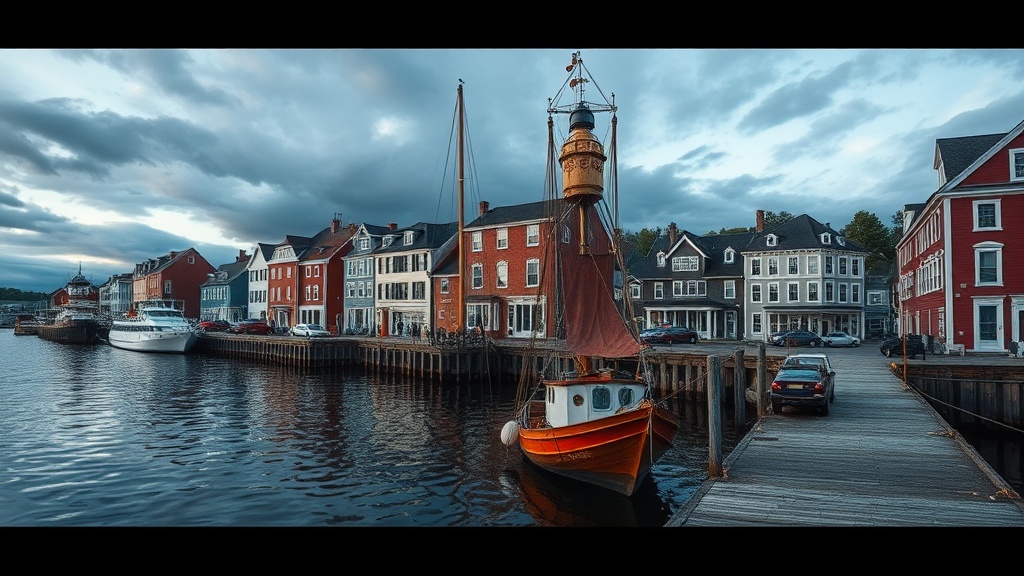
A Stroll Through Time: Uncovering Lunenburg's Waterfront Secrets on Foot

How can I best explore Lunenburg's waterfront history?
Stepping onto Lunenburg's historic waterfront is to step back into a vibrant past, a time when tall ships dominated the horizon and the scent of salt mingled with sawdust. This guide will walk you through a detailed exploration of the town's UNESCO World Heritage-designated harbourfront, revealing its storied past, living maritime culture, and unique culinary offerings. You’ll learn precisely where to begin your journey, what to look for, and how to immerse yourself in the authentic character that makes Lunenburg a truly special place.
Your discovery of Lunenburg's waterfront should begin near the heart of the historic district, ideally around the intersection of Montague and Bluenose Drive. This central point provides immediate access to the working harbour and serves as an excellent launchpad for understanding the town's deep connection to the sea. From here, you can easily orient yourself with the iconic red-roofed buildings that line the shore—many of which have stood for centuries, testament to Lunenburg’s enduring spirit.
As you move along Bluenose Drive, pay close attention to the architectural details of the buildings. Many are former chandleries, sail lofts, and fish processing plants, now repurposed but still retaining their original charm and structural integrity. The town has made remarkable efforts to preserve its 18th and 19th-century appearance, offering a rare glimpse into a colonial port that thrived on the Grand Banks fishery. Informative plaques and interpretive panels are strategically placed along the route, offering fascinating anecdotes and historical facts. These often highlight the families who built these structures, the trades they plied, and the ships they sent out to sea. Don’t rush past them; they offer rich context to the bricks and mortar around you.
A significant part of Lunenburg's historical fabric is its status as a