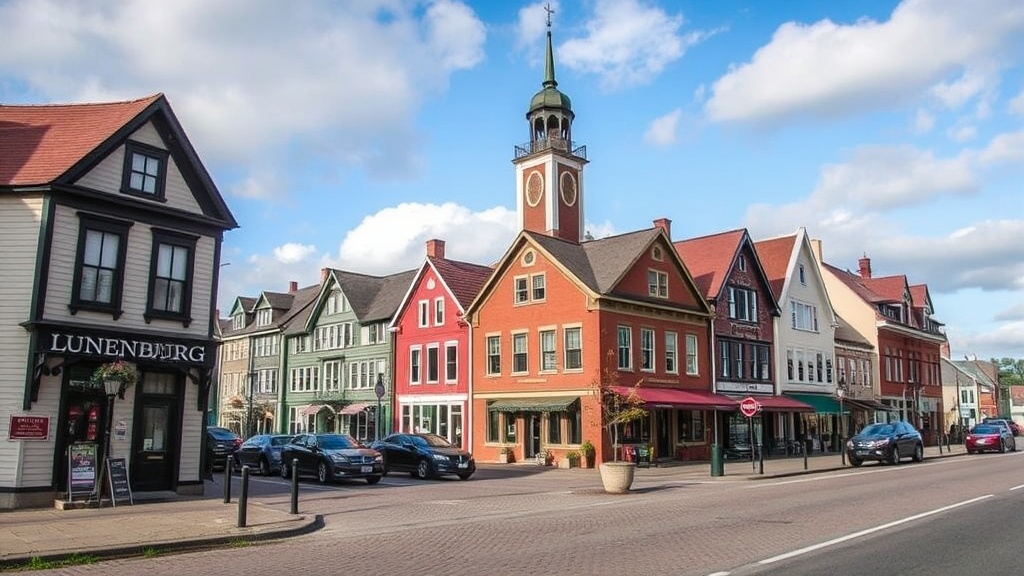
Lunenburg Old Town: A Resident's Guide to Historic Living

What This Guide Covers (And Why You Should Care)
This is a practical walkthrough of what it's actually like to live in Lunenburg's Old Town—the day-to-day reality beyond the postcard views. Whether you're house-hunting, recently moved here, or just curious about Lunenburg living, you'll find specifics on property maintenance, community rhythms, and handling life inside a UNESCO World Heritage Site. Living here isn't like living anywhere else in Nova Scotia—the rules are different, the charm comes with quirks, and the community runs on its own clock.
What Makes Lunenburg Old Town Different from Other Historic Districts?
Lunenburg Old Town sits on a narrow peninsula jutting into Mahone Bay, and that geography shapes everything about daily life here. Unlike heritage districts that feel like museums, Lunenburg's core remains a working neighborhood—fishermen still head out before dawn, shop owners sweep their stoops at 7 AM, and kids cut through back alleys on their way to Lunenburg Junior Secondary.
The first thing you'll notice: color. The UNESCO designation doesn't just protect buildings—it protects the right to paint your house orange, purple, or any other hue that would get you HOA violations elsewhere. That's not whimsy; it's tradition dating back to when fishermen painted their homes with leftover boat paint. In Lunenburg, a bright yellow Victorian on Cornwallis Street sits comfortably beside a deep red Georgian on Tannery Road. No one bats an eye.
The catch? That freedom comes with responsibility. The Town of Lunenburg's heritage bylaws require approval for exterior changes—windows, siding, even paint colors in some designated zones. It's not as restrictive as some fear (you're not stuck with peeling lead paint), but you'll need to file paperwork before replacing those drafty original windows with something efficient. Worth noting: the town's heritage planner is approachable, and the process moves faster than you'd expect if you do your homework first.
How Much Does It Actually Cost to Maintain a Historic Home in Lunenburg?
More than a comparable newer build—but not as much as horror stories suggest. Here's the thing about Lunenburg's housing stock: most Old Town properties were built between 1860 and 1920, which means they're post-and-beam construction with real lumber (not nominal two-by-fours), thick plaster walls, and foundations that have settled into the granite bedrock over 150 years. The bones are good. The systems, though—that's where budgeting matters.
| Maintenance Category | Typical Annual Cost | Notes |
|---|---|---|
| Heating (oil/propane) | $2,800–$4,200 | Older homes are drafty; insulation upgrades help |
| Roof maintenance/replacement | $800–$12,000 | Heritage-style metal roofs last 50+ years |
| Foundation/grading | $500–$3,000 | Water management is critical on the peninsula |
| Plumbing updates | $1,200–$5,000 | Galvanized pipes common in pre-1950s homes |
| Electrical upgrades | $2,000–$8,000 | Knob-and-tube still exists; insurance requires updates |
| Heritage compliance fees | $150–$500 | Permits for exterior alterations |
The peninsula's water table is high, and Atlantic storms push right up against the harbor. That said, Lunenburg homeowners have dealt with this for generations. French drains, proper grading, and—honestly—accepting that your basement will be damp in April are part of the package. Many residents run dehumidifiers year-round and treat their basements as utility space, not living space.
Insurance runs higher than in new subdivisions, and some insurers won't touch knob-and-tube wiring. Shop around—Nova Scotia's local brokers know Lunenburg's housing stock and can match you with underwriters who understand heritage properties.
Where Do Lunenburg Residents Actually Shop, Gather, and Get Things Done?
Here's something tourists miss: Lunenburg functions as a complete small town, not just a pretty face. Yes, the waterfront restaurants draw crowds in summer, but locals know the practical corners of our community.
For groceries, the Lunenburg Farmers' Market (Saturdays at the Community Centre on Victoria Road) isn't just artisanal cheese—it's where you get your carrots, your bread, and your update on who's moving where. For the weekly shop, Superstore in Bridgewater is twenty minutes away, but many Lunenburg residents split the difference with MacKenzie’s Your Independent Grocer on Linden Avenue for basics.
Hardware needs? Pierre's Home Hardware on Cumberland Street stocks the oddball parts your 1920s door hardware requires—stuff the big boxes don't carry. The staff knows old houses. Need a locksmith who understands mortise locks? That's Pierre's.
The Lunenburg Public Library on Cornwallis Street runs beyond books—they host the tax clinic in March, seed swaps in April, and the knitting group that meets every Thursday (you don't have to knit; you can just listen to local gossip). The Lunenburg Academy building, that giant Victorian landmark on Prince Street, now houses community programming—art classes, concerts, the occasional wedding.
Healthcare happens at the Lunenburg Medical Centre on High Street—walk-in hours most mornings, though you'll want to establish with a family doctor (the provincial waitlist applies here too). For emergencies, Fishermen's Memorial Hospital is right in town, with the regional hospital in Bridgewater handling more complex cases.
What's the Community Rhythm Like for Year-Round Residents?
Lunenburg breathes differently through the seasons. Summer brings bustle—tour buses, cruise ship days, visitors asking where to find the "real" Lunenburg (you're standing in it). The fall is glorious: the cruise ships leave, the leaves turn, and the Lunenburg Doc Fest brings documentary filmmakers and savvy audiences. Winter is quiet—sometimes too quiet—but that's when the community tightens. The Friday night hockey games at the Lunenburg County Lifestyle Centre become social events. The potlucks at Zion Lutheran Church (the one with the tall steeple you see in every photo) don't stop for snow.
Here's the thing about fitting in: Lunenburg has families who've been here six generations and newcomers who arrived last month. The distinction matters less than participation. Show up at the volunteer fire department's breakfast fundraiser. Join the Lunenburg Waterfront Association meetings (even if you don't live on the water—decisions made there affect the whole town). Shop at the co-op. The peninsula is small—under 2,500 residents in the Old Town core—and word travels. That's good when you need a recommendation for a plumber who won't rip you off. It's something to remember when you're tempted to complain loudly about the summer traffic.
The catch? Services thin out in winter. Some restaurants close January through March. The ferry to Tancook Island runs less frequently. You'll learn to stock up before storms and to check the tide charts if you're parking near the waterfront (king tides have claimed more than one car from an unsuspecting visitor—don't be that person).
What Should You Know Before Moving to Lunenburg's Old Town?
Property taxes in Lunenburg are reasonable compared to Halifax—expect to pay roughly 1% of assessed value annually, though heritage properties sometimes qualify for provincial grants if you're doing restoration work. The Town of Lunenburg offers a heritage property tax exemption for qualifying restoration projects; it's worth the paperwork if you're planning major work.
Parking is street-only in most of the Old Town—no driveways, no garages (except the rare modern infill). Residents get annual street parking permits, and enforcement is relaxed unless you're blocking snow removal or a driveway. In summer, you'll compete with tourists for spots near the waterfront. Locals know the side streets—Gilmour Street, Alexandra Street—where spaces open up even on busy days.
Utilities run through the town's own infrastructure, which means water and sewer bills come from Town Hall, not a provincial utility. Rates are competitive, but the aging pipes mean occasional boil-water advisories after major storms. Keep a few gallons stored—it's not frequent, but it happens.
The schools serve the broader Lunenburg County. Lunenburg Junior Secondary handles grades 6–8, and older students bus to South Shore Regional School in Lunenburg County or Park View Education Centre in Bridgewater. The bus system is reliable; the social dynamics are small-town (everyone knows everyone, which cuts both ways).
Living in Lunenburg Old Town means accepting some inconveniences in exchange for character you can't manufacture. Your floors won't be level. Your windows might rattle in a south wind. You'll hear the foghorn on misty nights—and after a few months, you won't sleep well without it. The tradespeople who know these houses are aging; ask around for the younger carpenters and electricians learning from them.
What you get in return: a harbor view that painters have tried to capture for two centuries, neighbors who check on you when the power's out, and the particular satisfaction of maintaining a piece of built heritage that's survived Atlantic storms, economic collapses, and the whims of fashion. Lunenburg doesn't need more tourists—it needs residents who understand what they've bought into and are willing to maintain it. If that's you, the town will make room.